
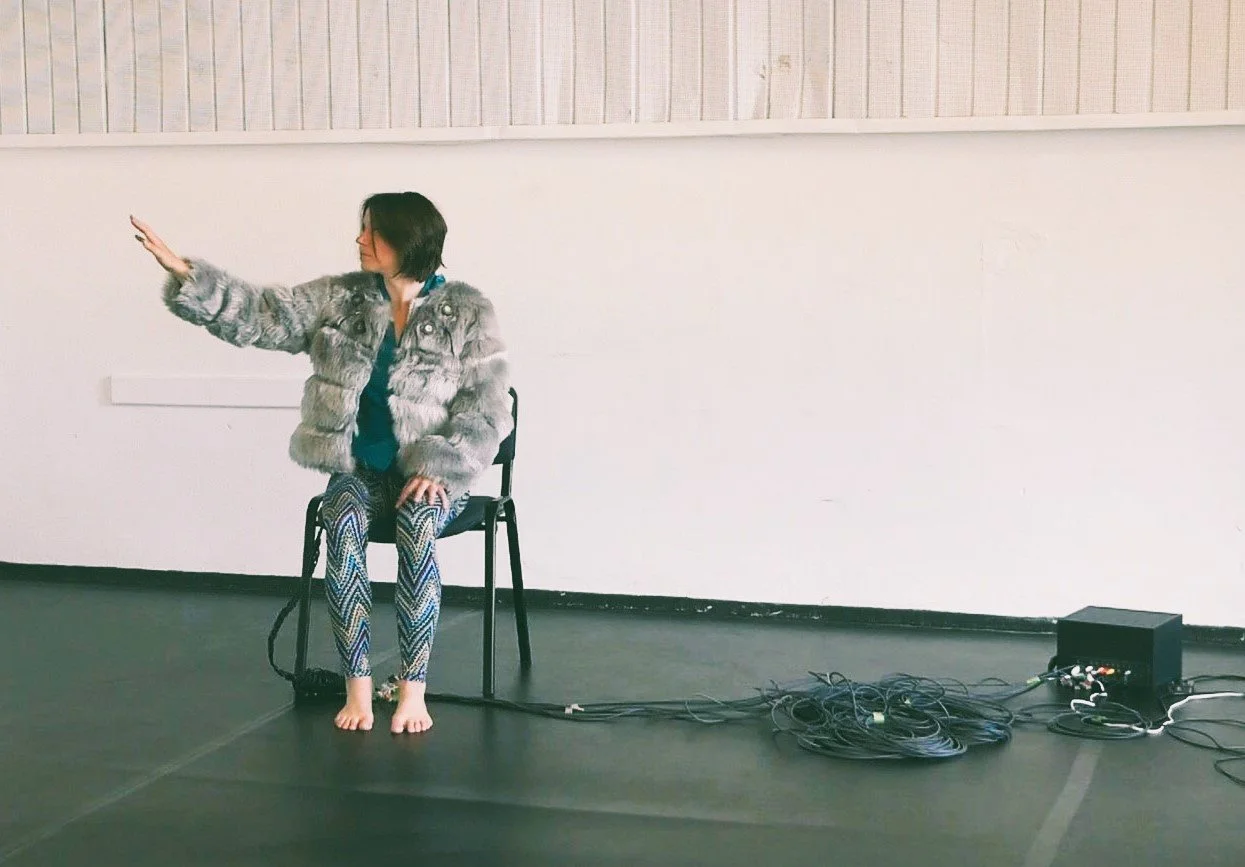
You see, I feel …
I see, you feel …
You feel, I see …
You see, I feel … I see, you feel … You feel, I see …
Sketches of Touch: A performative detour through foreign perception, back to one's own

VISION
01
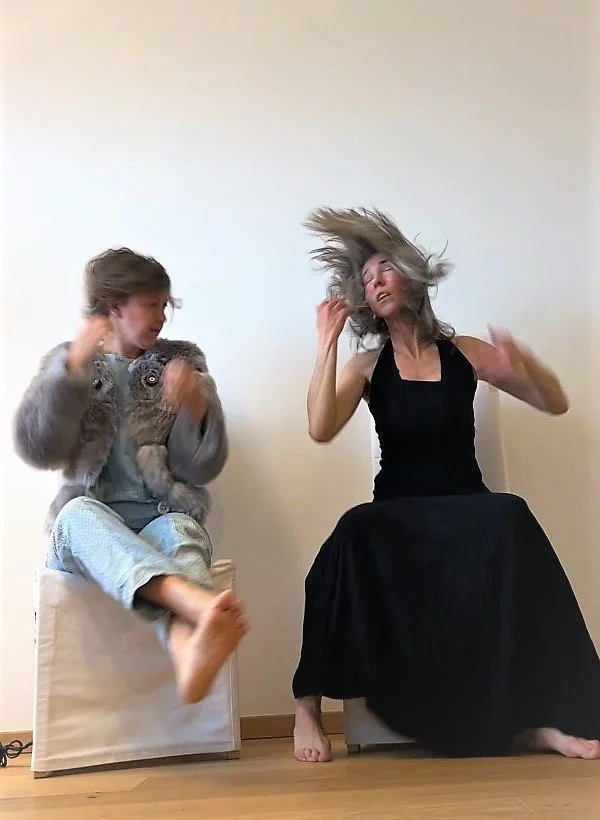
So, what is it like to be a bat?
So, what is it like to be a bat? Decades after Thomas Nagel posed his question, quoted again and again ever since, it remains unanswered. Not only because we cannot share another being's inner life, but because we cannot even define what that inner life is, let alone experience it from within.
Can we approximate the riddle of how others—humans, other animals and other (sentient or agential) beings—feel and perceive their Umwelt? Can embodiment take us into another's subjective experience? And can body-based art and technology point toward that threshold?
Inspired by the principle of sensory substitution, feels like explores ways of enhancing and transcribing senses. A picture, a facial expression, a sound, weather data—translated into a tactile pattern, and projected onto the skin of a performer and/or the audience.
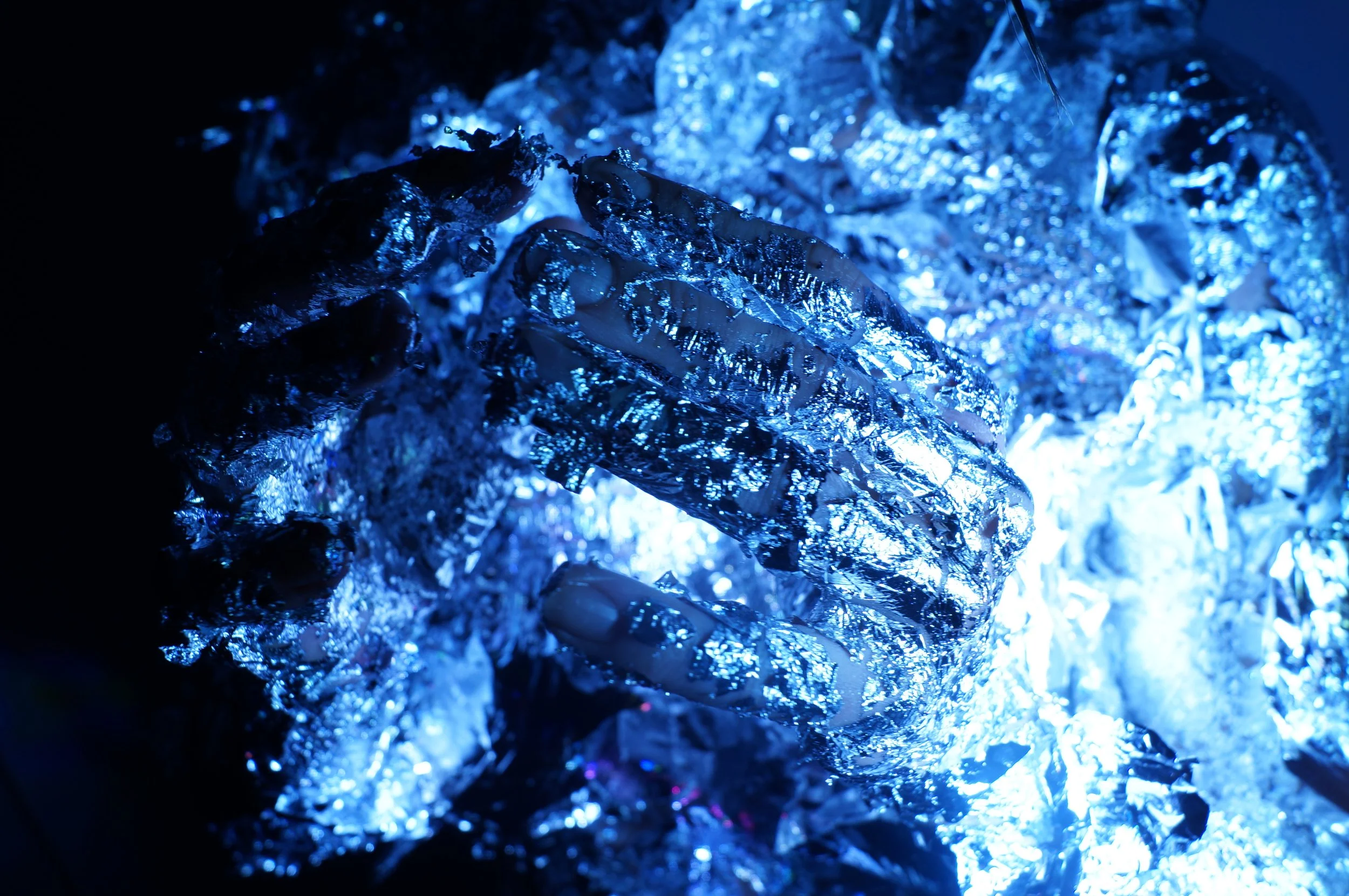
Can a gesture be felt as a pattern on skin? Can an emotion arrive as haptic information? What impulse, what flinch or reach, does the body make when it receives a sense that was never its own? And might that jolt — however small — shift one's habitual paths of thought, and so of action? Or reveal something yet unknown?
feels like takes a detour through another's body: "putting on" its senses, however approximately—inferred through kinesics, physics, chemistry, and performative methods—playing with the guesswork of what it might be like to be inside them.
To touch another's senses is to be touched in return. In a moment when other Umwelten are so easily reduced to data, to resource, to background—every one we fail to imagine is a world that might just disappear one day, ignored by the story history tells.
The proposition is a smaller, stranger gesture: not to look at the other, or speak for it, but to let its senses briefly move through your own skin. Not simulation, but closeness—not only rational understanding, but knowledge that lives in the body. Making sense—so to say.
THE tactile technology
02
Haptic Sound Jacket
The haptic sound jacket is a DIY tactile device: a jacket or set of straps fitted with 5.0 surround-sound speakers that translate data, for instance from emotion recognition, into sound and vibration on the body. Each speaker vibrates differently depending on frequency. Their placement varies from device to device, with the bass speaker usually on the upper back. Depending on context and intended outcome, the jacket is worn by a performer, the audience, or both.
In tactile-only experiments the vest by bHaptics is being used.
In Forced Feelback, the jacket is part of a feedback loop. Emotion recognition libraries (open-source FER library) detect and analyze facial expressions of individuals during emotionally moving conversations, mostly with dearly missed people in places they could not, or can no longer, travel to: involuntary separations. The captured expressions, classified as six "basic emotions" (after Paul Ekman*) are translated in real time into sound sequences composed for the project and played through the jacket.
In a separate space (for Forced Feelback, in a different country), performers wearing the jacket respond through movement. Trained in a non-psychological, postdramatic method, they respond intuitively and bypass the psychological judgement a conventionally trained performer would apply. In one experiment, performers knew the sounds stood for six emotions, but not which sound meant which. The result is both a reenactment of the original moment in motion and a new fragment of a story. Closing the loop, the recorded movement data is fed back to the person in the conversation, prompting the next response cycle.
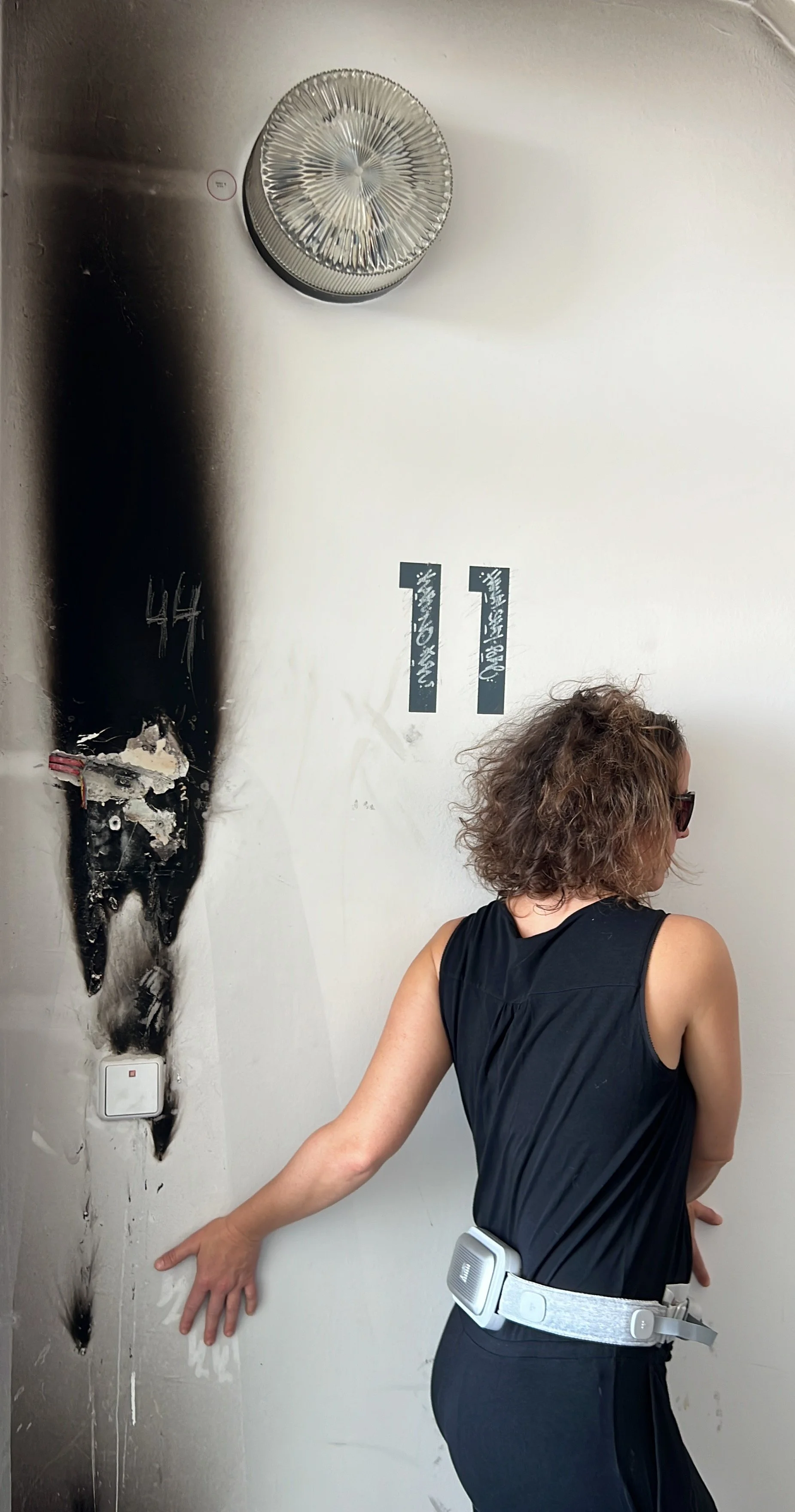
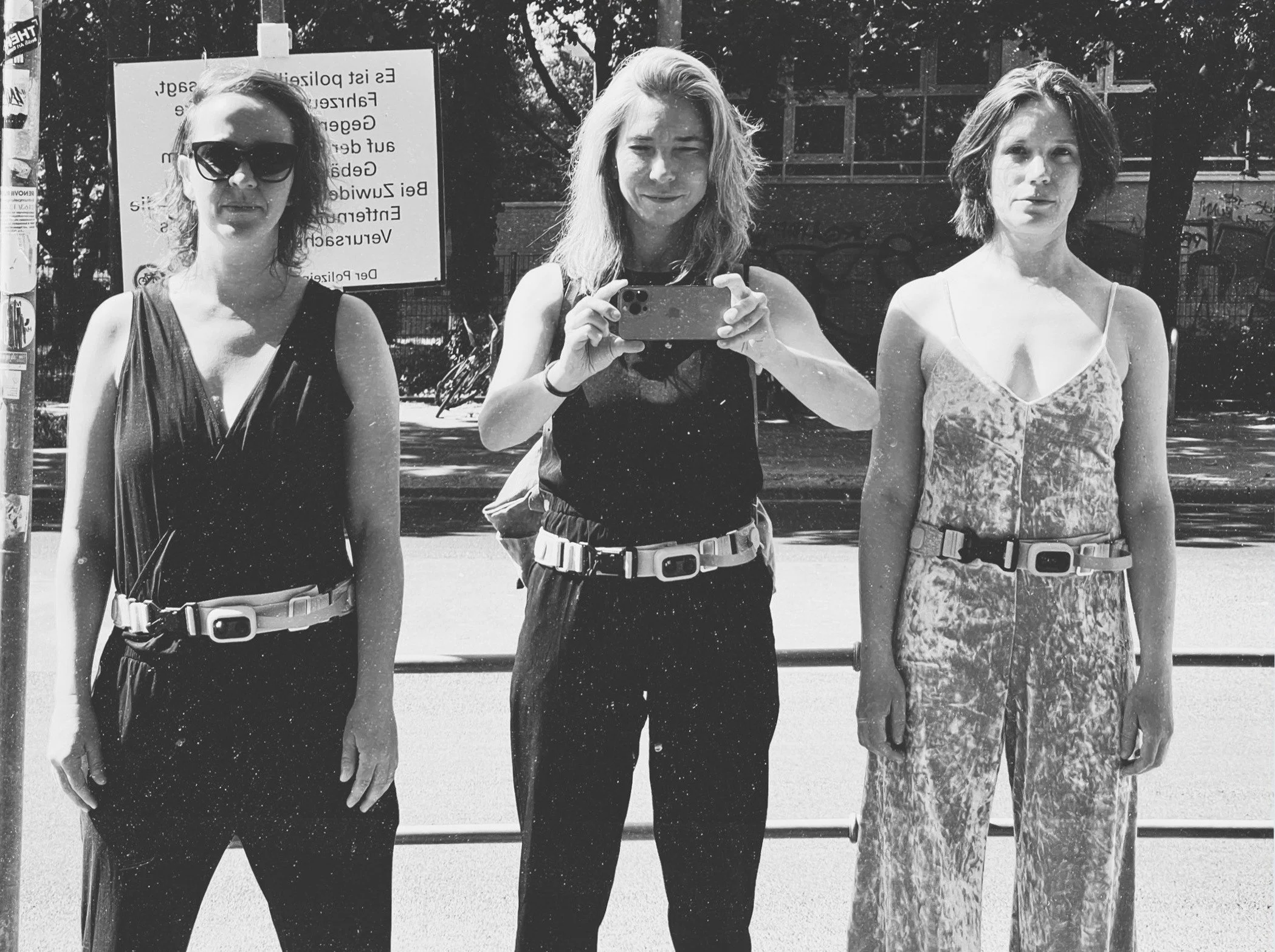
An as of 2023 endeavor trying to work with the beta version of AIGuided haptic belts remains to be continued. First attempts sparked a curiosity for more. The amazing tech which AIGuided is working on, was developed for visually impaired people: the AI inside the belt translates visual information from one’s surroundings into tactile patterns which point a person into an obstacle-free direction. For the performance context, I wanted to switch the units of two people wearing the belts in two distant places and have them receive each others visual data via haptic sensation. This is still in the works and I hope to send you exciting updates within a near future.
*The artist takes a critical view of emotion recognition software that claims to "turn the inside out."
PROJECTS
03
Thinking bodies and sensing systems
Artistic research question: How does the tactile transposition of another being's inferred sensory data onto human skin affect the wearer's empathetic understanding and behavioral response toward that being?
Both projects described below, Reenacting the Kitchen Debate and Forced Feelback, emerged from a residency at BEK (Bergen Centre for Electronic Arts) and from the research stipend "Virtual Bodies” (Dessau/Vogelgesang/Wagner) at FWT Köln, funded by the Fonds Darstellende Künste.
Reenacting the Kitchen Debate | 2023 and ongoing
Performance with video & tactile vest – inspired by the actual Kitchen Debate in 1959
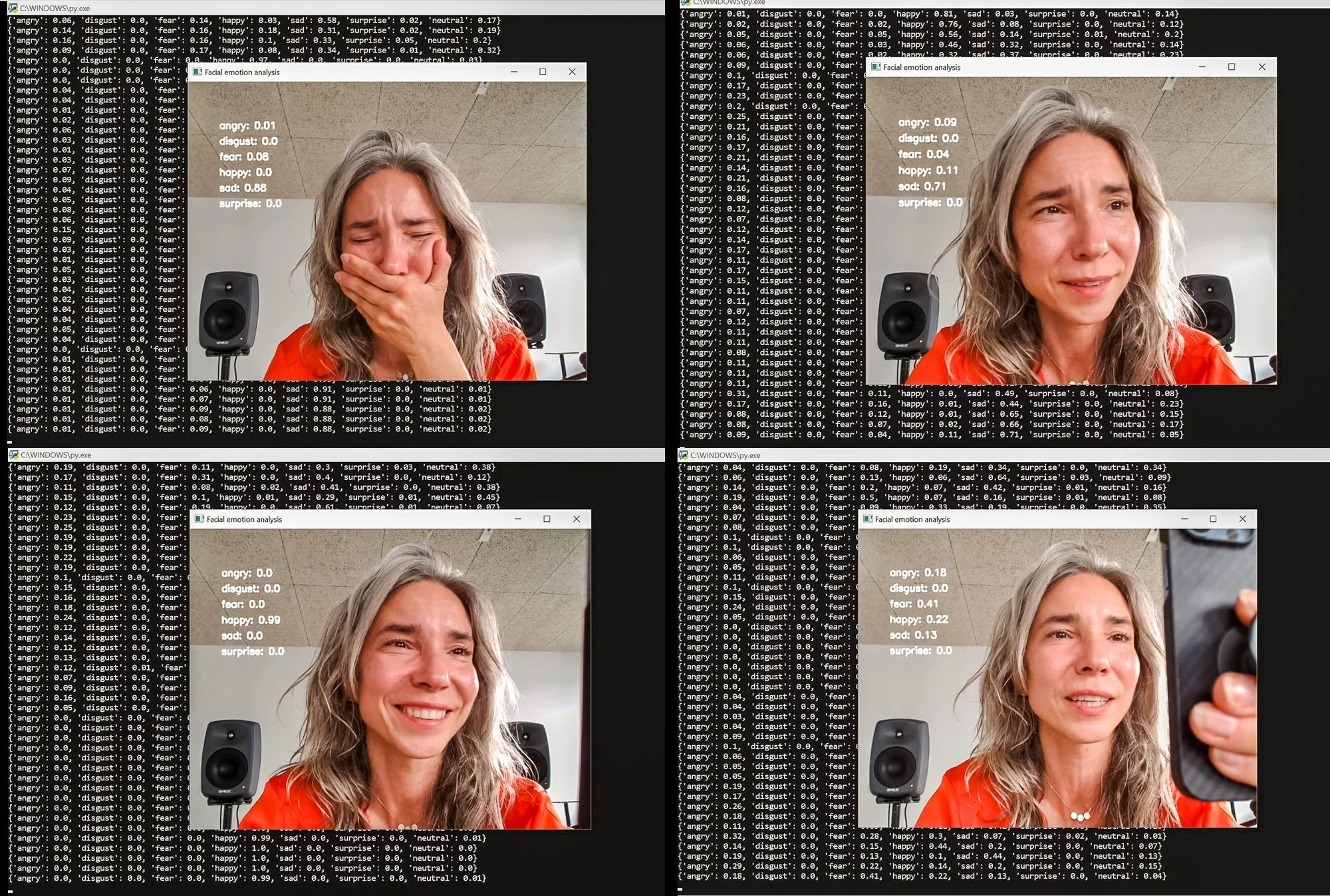
Forced Feelback | 2023 and ongoing
Data from emotion recognition → sound → tactile transmission onto performer → physical movement

Variations of a Separation | 2018 and ongoing
Translating visuals into touch – light, photography & tactile patterns
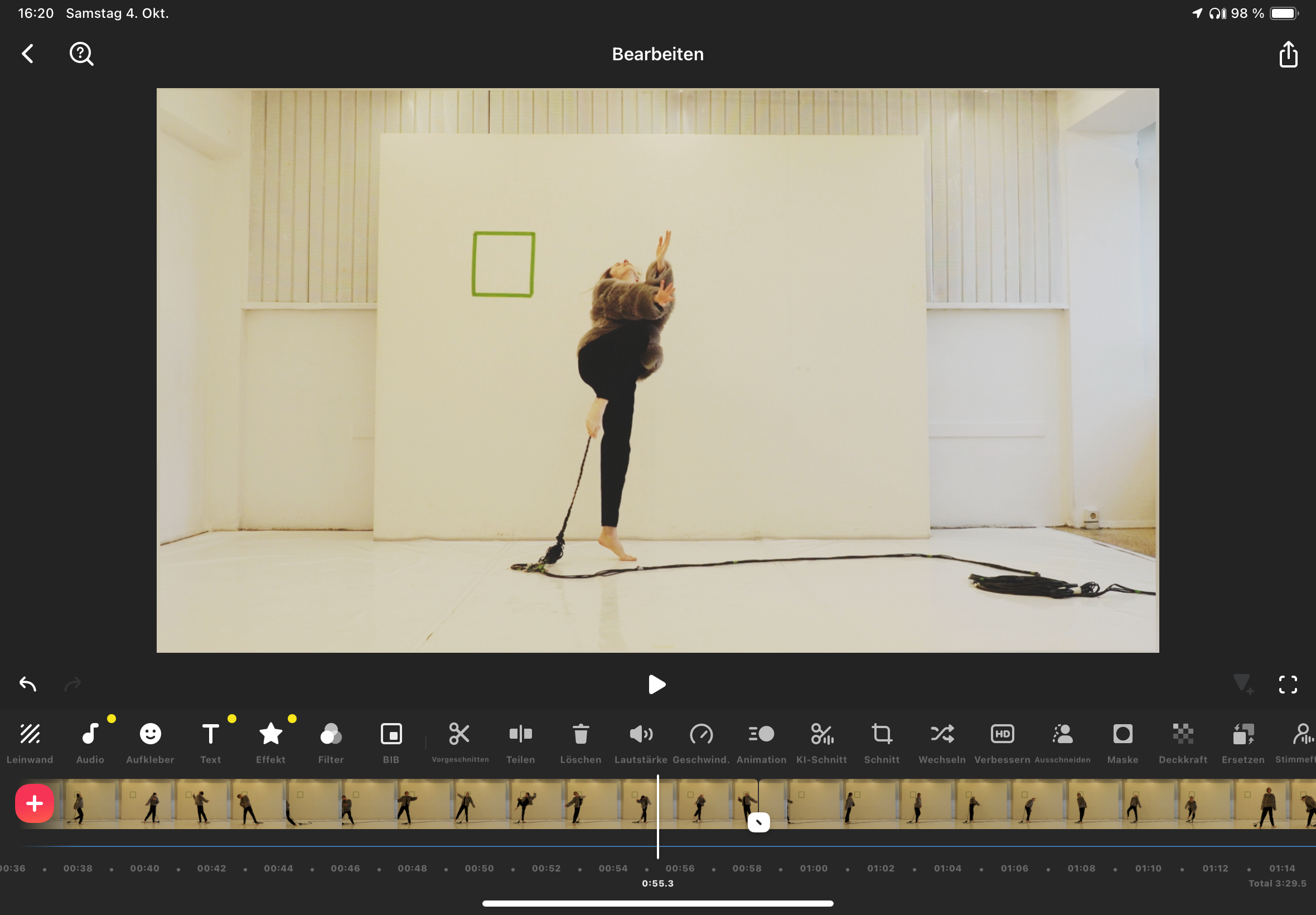
Green Window | 2024 in progress
Data from emotion recognition → sound → tactile transmission onto performer → physical movement
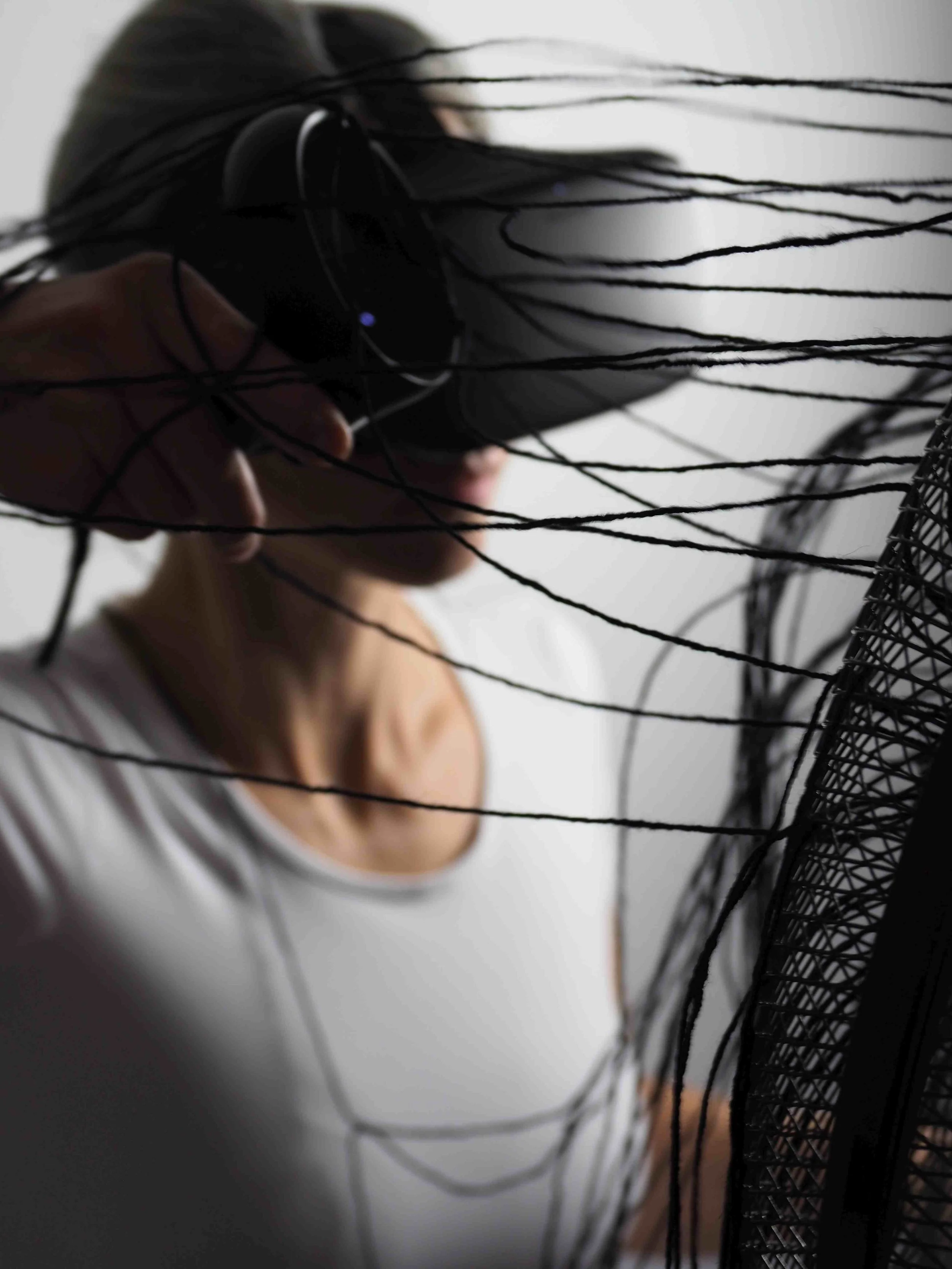
3D skin | 2021
VR & Touch – Research: Visuals combined with „illogical“ tactile stimuli
methods
04
Intersection of performance and technology
My work lives at the intersection of performance and technology. I use three core methods that continuously influence and shape one another.
-
Viewpoints / Composition: a physical improvisation method developed by Anne Bogart and Tina Landau. Postmodern, non-psychological and highly intuitive, it makes time, rhythm, proximity, architecture and the relationships between bodies visible and tangible.
Originally developed in part to give performers a clear, shared vocabulary, its descriptive parameters help in the search for equally clear tactile equivalents.
Performers respond not to meaning but to impulses in the moment. The result is movement that answers directly to what is felt.
-
Reenactment: not reproduction, but embodiment.
I understand physical reenactment as a way of accessing mental and emotional states through movement, voice and posture, even states that are not my own. It lets me approach, from within, what would otherwise stay foreign.
Since 2014 I've been working intensively with the precise copying of bodies and voices from online documentary material, which we used to explore how digital phenomena affect people's behavior and vice versa. The space of difference that opens up between original and copy became a way to explore the thinking body. A publication on one of my collective's works, [title], describes this approach to reenactment in detail.
After more than a decade of this practice, I believe that this very difference, between the other's body and my attempt to copy it, can be a source for studying body language and maybe even the inner states behind it. Not from the outside, the way emotion recognition tries to read a face, but from within. It will always stay an approximation. But that's exactly where it gets interesting
… Since 2020, Marina has taught a practical seminar in theater studies at the Freie Universität Berlin on the relationship between performing bodies and new technologies. In it, she combines her experience in reenactment and technology-based performance with the postmodern technique Viewpoints/Composition.
-
Feelback-Loop: The connection between sender and receiver, both technical and physical.
Emotions, or other signals, are extracted from facial expressions, body language and/or further data sources. These are encoded as data streams and translated into sound, vibration and haptic patterns.
Depending on the setup, the receiving body responds with or without knowing what it is receiving, what the sender might be perceiving, or how the data was translated. Out of this, movement emerges: a response.
This response can in turn be mirrored back, and a cycle of perceiving, responding and intuitively evaluating begins.
ABout
05
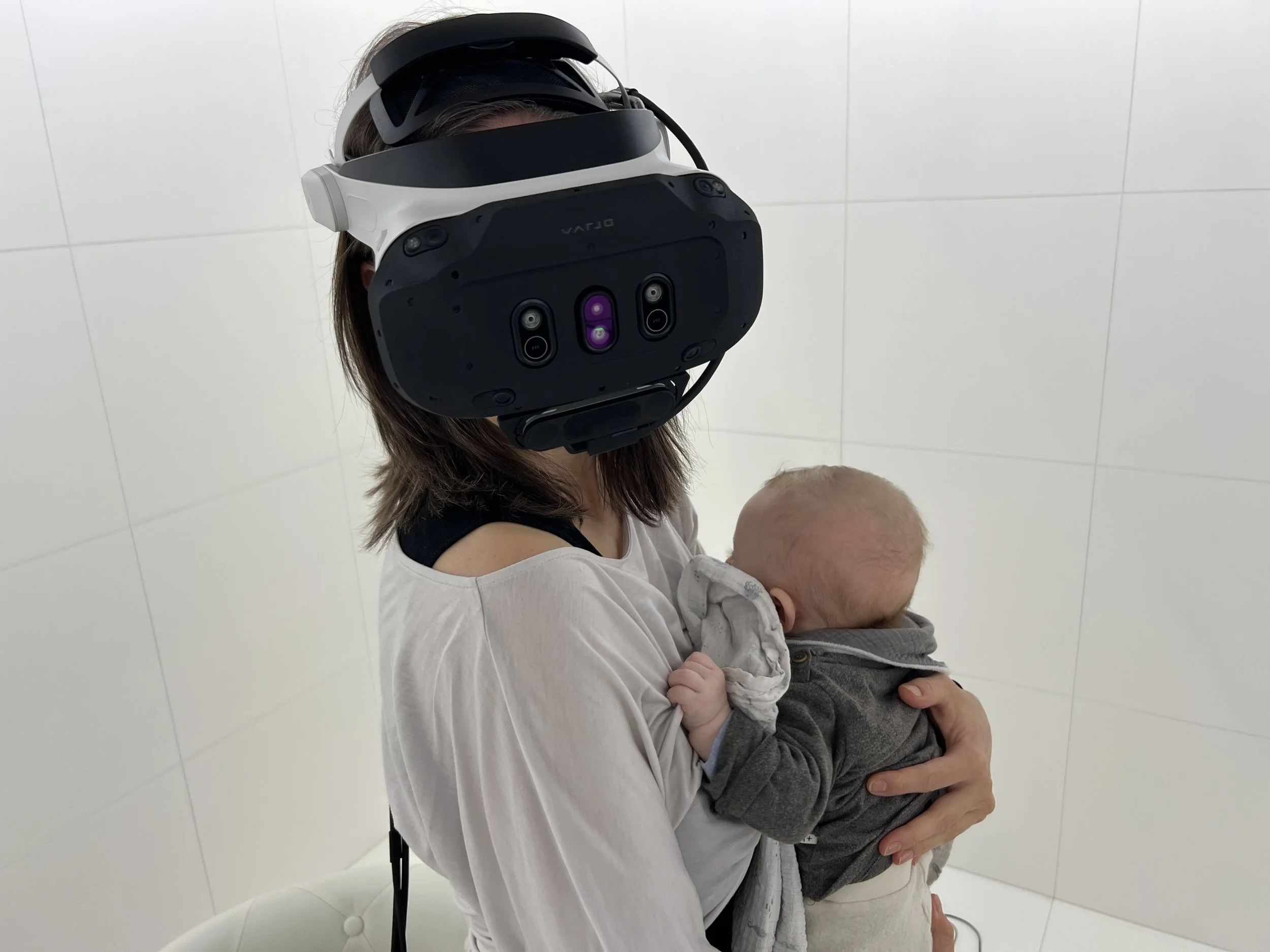
Marina Dessau
Having grown up amid diverse cultures and systems, Marina combines body-based theater practice with technological research, inspired by the phenomenon of sensory substitution. The starting point is the body—as a sensor, translator, and resonating space.
Her work probes the somatic understanding of humans, other animals, and varied agencies, using tactile technology (data-to-body) to communicate through the skin. Ultimately, she seeks to cultivate an alternate, sense-based experience of another's Umwelt and uncover the cracks in our everyday inference patterns.
Marina has been working as a theatre performance artist most her adult life. Classically educated in performing arts at the University Mozarteum Salzburg she’s also been working as an actress, speaker, Dramaturgy adviser in film and as a lecturer at various arts universities in the German speaking region. Since 2020, she has been teaching an intensive practical seminar every semester at FU Berlin's Institute of Theatre Studies on the relationship between performing bodies and new technologies, grounded in the postmodern Viewpoints/Composition method.
As co-founder of the performance collective internil, the artist has developed plays and theater works that explore phenomena of the digital age and translate them into physical, analogue space. Since 2015, she has practiced, studied and taught Viewpoints and Composition, the physical improvisation method developed by Anne Bogart and Tina Landau, leading workshops and open training sessions across Europe.
After first encountering emotion recognition (ER) technology as a performer in another artist's work in 2016, she trained in the Facial Action Coding System (FACS) for several months. In her own artistic work, her critique of "outside-in" approaches that infer inner states from outward expression has since deepened—while she still hopes that a detour through the body might bring us closer to another's subjectivity: not to accept it, but to understand it, and so, where necessary, to disagree better and more peacefully.
Current/Recent
2026/2027 Viewpoints/Composition Workshops in The Hague (NL), Berlin (D), Salento, Puglia (I)
Currently focusing on artistic research into tactile technology in conjunction with the Viewpoints approach, with Viewpoints Training Berlin
2025 DT Berlin & Volkstheater Vienna as a performer and dramaturgical consultant for Neues Fleisch by internil / Arne Vogelgesang (Press 1,2,3)
2025 Viewpoints/Composition Workshops in Copenhagen (DNK), Berlin (D)
Since and consistently
… 2024 Mother
… 2020 Free University of Berlin (FU Berlin): Ongoing teaching position: Practical seminar in theater studies on the relationship between performing bodies and new technologies.
… 2017 internil’s working method: Leading workshops at, among others, the Department of Theater Studies at the University of Leipzig, the Zurich University of the Arts, and the Dresden Academy of Fine Arts. Focus: Reenactment as a mode of performance and its connection to performative approaches.
… 2005: Theater performance collective internil (co-founder) and, since 2012, (supra-)regional funding for artistic theater performance projects with/for internil.
… 2011: Dramaturgical consulting for, among others, documentary producer Nadja Smith and artist Nora Adwan.
Marina studied performing arts at the Mozarteum University in Salzburg, Austria.
PUBLICATIONS, GRANTS, AWARDS
2024 “Sie sind ins Du gerutscht” In: RE/VERSIONEN. Artistic and Scientific Approaches to Ambiguity. (Guest appearance: Arne Vogelgesang) Edited by Jamila Arenz, Veronika Darian and Jessica Hölzl. Berlin: Neofelis 2024, pp. 143–148. Print & Open Access
2024, DeGruyter: “GOG/MAGOG: A Disinformation Campaign,” an essay in the book Gog and Magog: Contributions toward a World History of an Apocalyptic Motif (pp. 877–912)
Since 2015, regular individual project grants from the Berlin Senate Department for Culture and Europe and the Capital Culture Fund for internil projects. Artist residency at BEK (Bergen, NOR) in 2023. DAKU Research Grants in 2023 and 2021, Initial in 2017. “Doppelpass” grant from the Federal Cultural Foundation, 2016–2019 (internil).
HBO Europe Development Award in 2016 for her documentary screenplay “The Earth Masters” (producer: Nadja Smith, concept: Alba Sotorra).
FESTIVALS
As internil: Theatertreffen/Stages Unboxed (Digital Showcase), Augenblick Mal! Festival, Impulse Theater Festival, Monologfestival, Internationale Schillertage.
As a performer: Transmediale Berlin (for Coralie Vogelaar and Marjolein Vogels). Tanztage Hannover (for Martin Nachbar and Gabi dan Droste).
get in touch
05
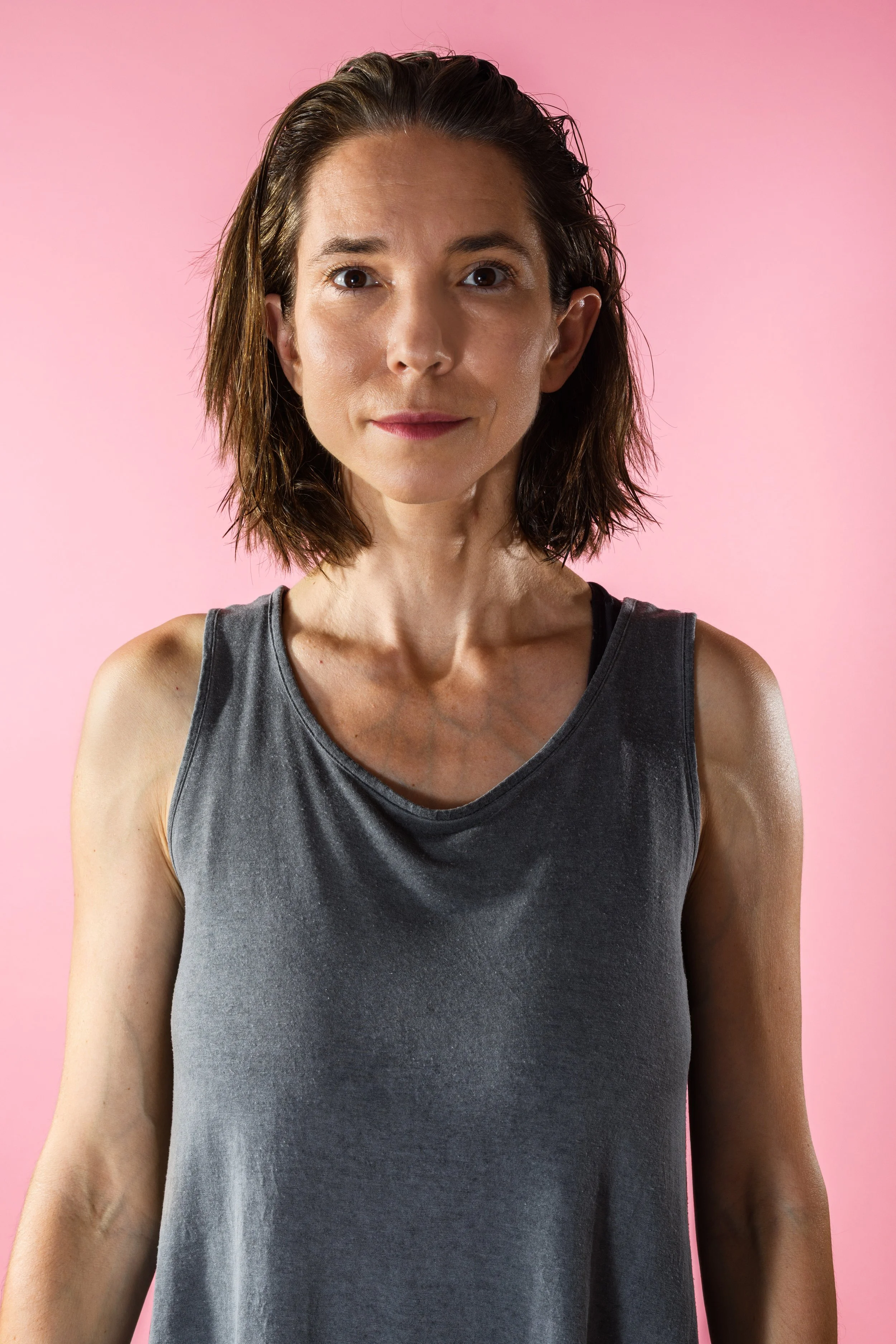
What drives me
Credits: Jule Roehr
After many years of working with the techniques of reenactment of radical bodies and a non-psychological postmodern approach to body movement, I believe there is a bodily way of knowing that offers a different understanding of other humans—and maybe even other animals. Not only a more empathetic one, but one from which the rational mind can later draw different conclusions than it would through observation and reasoning alone. I’d like to see (and feel) whether empathy can be approached through the sense of touch applying tactile wearables.
Our daily decisions, and the longer paths we take, are shaped by how closely connected we feel to someone or something. It's the perceived relation that matters—or its absence. This is what shapes how we think, and therefore how we act on those thoughts. So before rushing to judge, we might just as well—literally—take a walk in somebody else's shoes. “feels like" is one attempt at that walk: not in shoes, but through skin.